GroovAbility
A sensory-friendly fitness app for neurodiverse children.
“Why are neurodivergent children around me so much less active?”
Live on Google PlayIt began with movement.
My own fitness journey made me notice how much less active neurodivergent children around me were, including at my school. I wanted to build a way into movement that worked for them, rather than expecting them to adapt to an existing routine.
Built around the child.
I built an offline, sensory-friendly app with personalised, gamified exercise routines. A caregiver dashboard tracks progress and engagement.
I developed sensory-friendly exercise protocols with special educators and physiotherapists. NGO feedback led me to add dance-based exercises and gamification.
The best change was subtraction.
I began with online storage, but it did not work out for users. Moving to local storage with Hive made the app work offline. The product is built in Flutter and Dart.
An app is only useful if it works where people actually use it.
Listening is part of building.
URJA Special Centre
Interviews, feedback and pilot testing
Sunrise Special Learning School
Interviews, feedback and pilot testing
Armaan Special School
Feedback, demo, testing and full adoption
Shiv Nadar School SEN department
Major feedback, demo and adoption
Kaleidoscope Special NGO
Feedback
Out of respect for the privacy, dignity and confidentiality of the neurodiverse children we work with, photographs from NGO partner sessions are not shared here. The app screens and research document the work without identifying the children.
The community behind the productThe app, quietly in view.
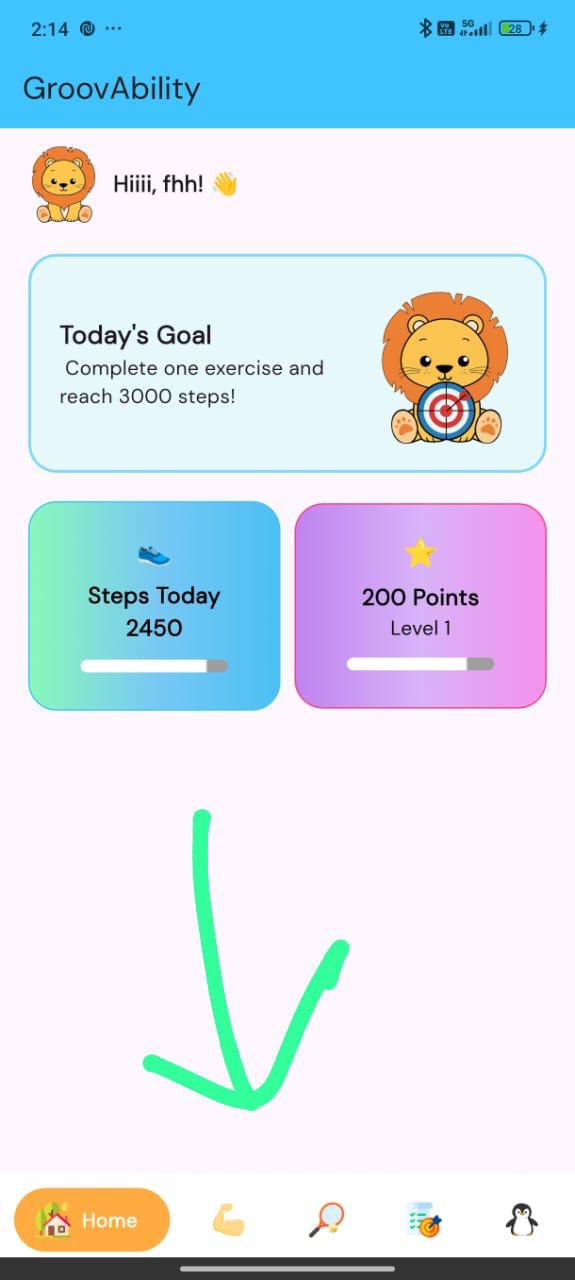
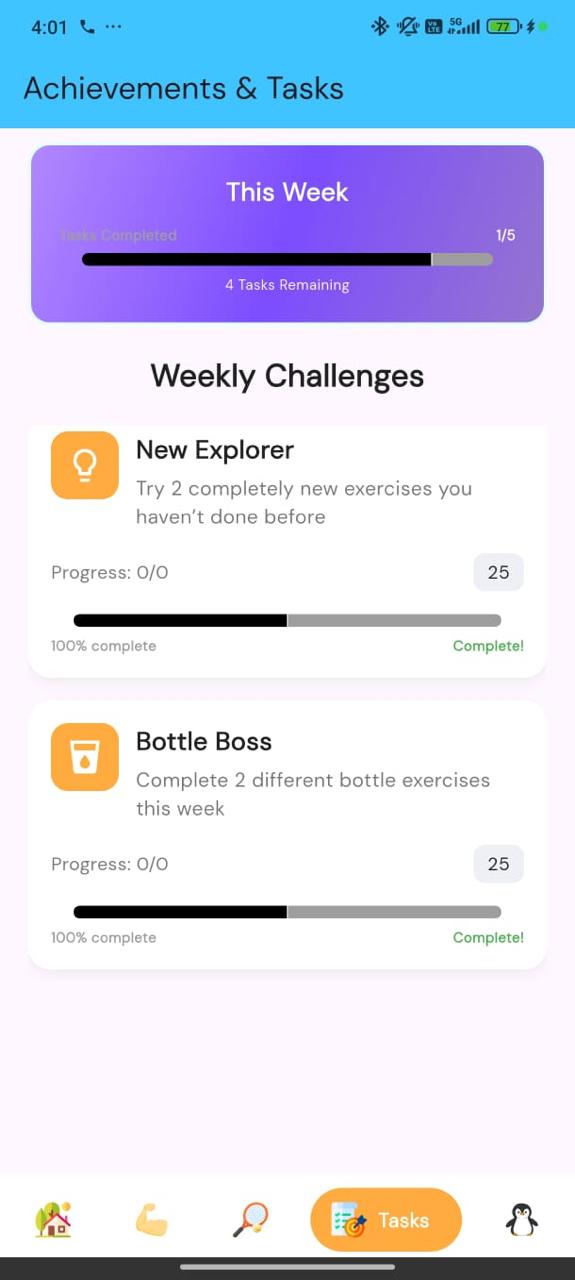
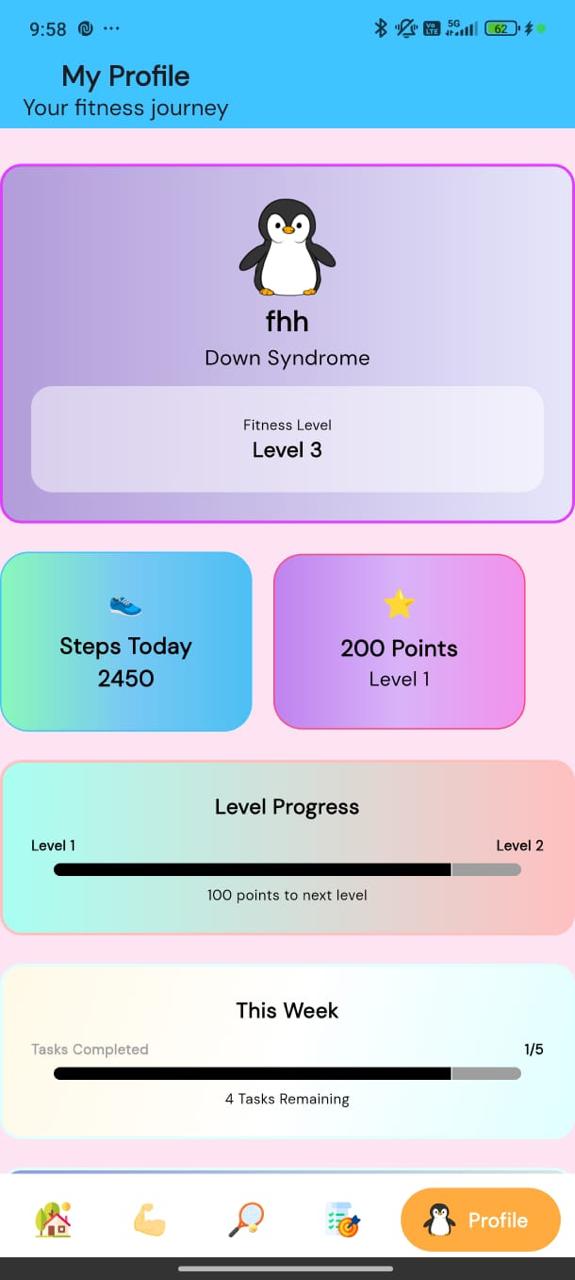
Watch the GroovAbility demo
Build. Observe. Question again.
3-week pilot · 42 children · 2 centres. Short-term, observational testing; not a controlled trial.
Secondary analysis of 20 published studies. Publication bias, small samples and methodological differences apply.
The pilot gives us an encouraging starting point, not a final answer. The next question is how the experience can adapt to each child.
- 01Instrumentation
- 02Feature definition
- 03Adaptation logic
- 04Evaluation
Next: an adaptive GroovAbility. Mentored by Janhavi Karande, The Innovation Story.
Two studies. One evolving idea.
From Accessibility to Prediction: A Data-Driven Framework for Designing Adaptive Digital Interventions for Neurodiverse Children
Secondary quantitative and thematic analysis of 20 published studies explores personalisation, engagement, performance and accessibility, and proposes an adaptive GroovAbility.
Research paper · CREST Gold Award 2026
GroovAbility: A Visual-Guided Fitness System to Improve Motor Skills in Neurodiverse Children
A 3-week pilot with 42 neurodiverse children across 2 special education centres measured participation, motor coordination and usability through educator observations and feedback.
Pilot study paper · 2025–2026